
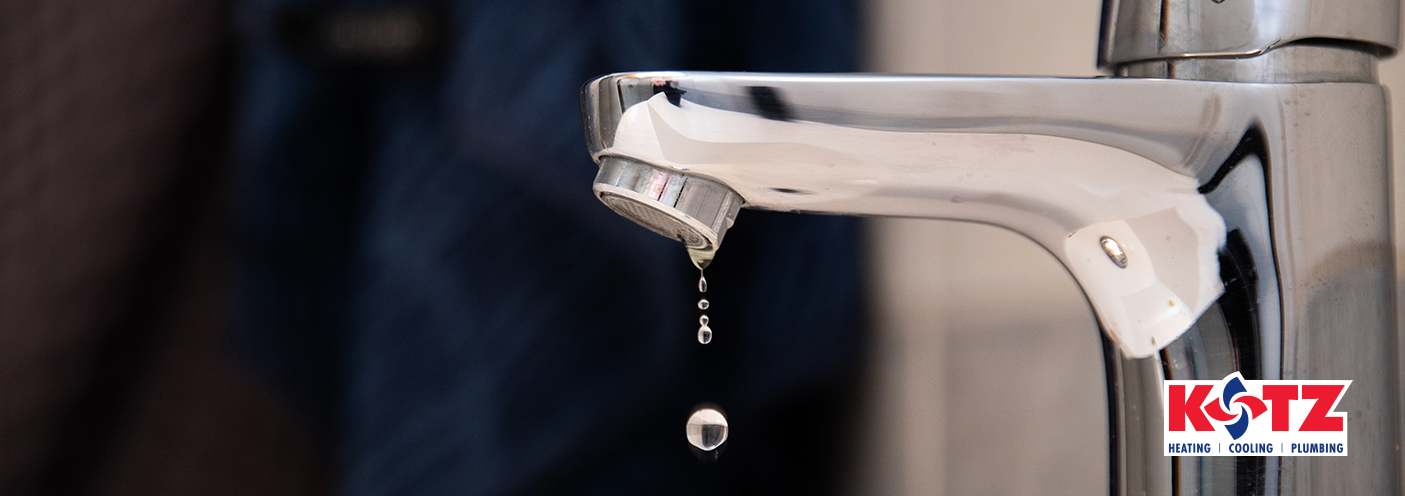
You turn off the faucet, walk away, and then hear it: drip, drip, drip. If you are wondering, “Why does my faucet drip after turning it off?” There are several possible causes.
A dripping faucet may seem like a minor annoyance. However, over time, it can waste water, increase your water bill, and point to worn or damaged plumbing parts. For homeowners in Waterford, MI, finding the cause early can help prevent a small plumbing problem from becoming a bigger one.
At Kotz Heating, Cooling & Plumbing, we have served local homeowners since 1929. Our team can diagnose faucet problems and recommend a reliable solution that fits your home.
Why Does My Faucet Drip After Turning It Off?
When you turn off a faucet, internal components should create a tight seal that stops water flow. If that seal is worn, damaged, loose, or blocked by mineral buildup, a small amount of water may continue to pass through.
Sometimes, a few drops immediately after turning off the faucet are simply leftover water draining from the spout. However, if the dripping continues for several minutes or does not stop, there is likely a problem that needs attention.
The exact cause often depends on the type of faucet you have and which internal component has failed.
A Worn Washer or O-Ring
Washers and O-rings help create watertight seals inside many faucets. Each time you use the faucet, these small parts experience pressure and friction.
Over time, they can become worn, cracked, stiff, or loose. Once that happens, water can slip past the seal even when the handle is fully turned off.
A worn washer or O-ring is a common reason for a dripping faucet. Replacing the damaged component may solve the problem, but the correct part and repair method depend on the faucet design.
A Damaged Faucet Cartridge
Many modern faucets use a cartridge to control water flow and temperature. When the cartridge wears out or becomes damaged, the faucet may continue dripping after you shut it off.
Signs of a cartridge problem can include:
- Water dripping continuously from the spout
- Difficulty completely shutting off the water
- A handle that feels stiff or loose
- Trouble adjusting water temperature
- Leaking around the faucet handle
A plumber can inspect the cartridge and determine whether replacing it will restore normal operation.
Mineral Buildup From Hard Water
Minerals in your water can collect inside faucets over time. This buildup may interfere with seals, cartridges, valve seats, and other small components.
Waterford-area homeowners may notice white or chalky deposits around faucet openings and fixtures. Similar deposits can develop inside the faucet where they are harder to see.
When mineral buildup prevents components from sealing correctly, water may continue dripping. Depending on the condition of the faucet, cleaning or replacing the affected parts may be necessary.
A Worn or Corroded Valve Seat
The valve seat helps create a seal between parts of the faucet and its spout. Constant exposure to water can eventually lead to corrosion, mineral buildup, or wear.
When the valve seat becomes damaged, the faucet may drip from the spout even when the handle is firmly closed.
Because the valve seat is located inside the faucet assembly, identifying this issue may require taking the fixture apart. Our plumbing team can determine whether the valve seat can be repaired or whether other components also need attention.
Water Pressure May Be Contributing to the Problem
High or uneven water pressure can sometimes contribute to dripping faucets. You may notice that a faucet drips at certain times of day or when other plumbing fixtures are being used.
Excessive water pressure can also put added stress on pipes, valves, fixtures, and appliances throughout your home. Therefore, repeated faucet leaks may be worth investigating rather than simply replacing individual faucet parts.
A professional plumber can check your home’s water pressure and determine whether it may be contributing to the problem.
Should You Repair or Replace a Dripping Faucet?
Not every dripping faucet needs to be replaced. In many cases, replacing a washer, O-ring, cartridge, or another worn component can restore proper operation.
However, replacement may make more sense if the faucet is older, heavily corroded, frequently needs repairs, or has several damaged components.
Consider having the faucet evaluated if:
- The dripping is constant
- The leak keeps returning after repairs
- The faucet has visible corrosion
- Water leaks around the base or handles
- The handle no longer operates smoothly
- Multiple faucet components are worn
Our team can inspect the fixture and explain whether repair or replacement is the more practical option.
Why You Should Not Ignore a Dripping Faucet
A slow drip may not seem urgent, but the wasted water can add up. More importantly, a dripping faucet can be an early warning that a seal, valve, cartridge, or other plumbing component is deteriorating.
Addressing the problem sooner can help you avoid ongoing water waste and additional wear on the fixture.
If you have several dripping faucets or have noticed other changes in your plumbing, such as unusual water pressure, leaks, or higher water bills, a professional inspection can help identify the underlying cause.
Schedule Faucet Repair in Waterford, MI
When you are tired of listening to a faucet drip after you turn it off, Kotz Heating, Cooling & Plumbing is ready to help. We have been serving Waterford and surrounding Oakland County communities since 1929, building a reputation for dependable service and straightforward communication.
Our experienced plumbing team can identify the cause of your dripping faucet and recommend the right repair or replacement solution for your home.
Contact Kotz Heating, Cooling & Plumbing today to schedule plumbing service and put an end to that persistent drip.